


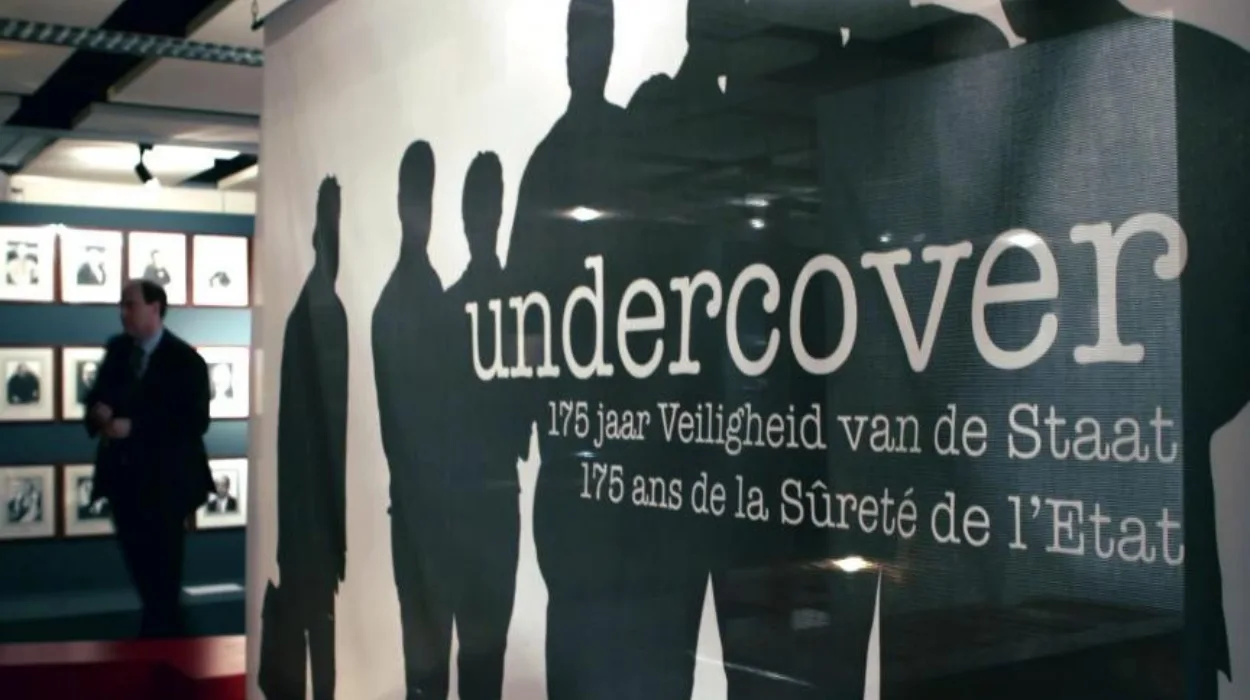
How Belgian Newsrooms were run by Belgian State Security Service (VSSE)
Three years after Qatargate erupted onto the European stage, attention is increasingly shifting away from the alleged corruption network and toward another, deeply uncomfortable question: the role played by Belgian journalists and their newspapers in constructing and amplifying the affair.
Far from acting solely as observers, several reporters from Belgium’s leading outlets appear, according to judicial documents, to have worked in close coordination with police, prosecutors, and state security services. This proximity now raises serious concerns about breaches of journalistic ethics and the erosion of editorial independence.
Journalists Named, Outlets Identified
The journalists most directly named in the case file are Kristof Clerix of the Dutch-language weekly Knack, and Joël Matriche and Louis Colart of the French-language daily Le Soir. All three are seasoned reporters specializing in police, intelligence, and judicial affairs—fields where access is valuable, but distance is essential.

Investigators discovered multiple exchanges between these journalists and senior police officials involved in the Qatargate investigation, including encrypted communications via Signal and WhatsApp. These were not limited to after-the-fact confirmations or background briefings, but reportedly included discussions about publication timing and operational details.

Coordinated Timing, Shared Information
Weeks before the December 9, 2022 raids, journalists from Le Soir and Knack met discreetly with senior officers from Belgium’s anti-corruption police. The stated purpose, according to testimony, was to ensure that no articles would be published before police action began.

This agreement alone pushes against the boundaries of ethical journalism. But matters went further. On December 8—one day before the raids—draft articles were circulated among journalists in a private messaging group. These drafts contained information that, at that moment, should have been known only to investigators: the number of searches, the identities of suspects, and the existence of large sums of cash, even if final figures were still pending.
Such conduct suggests that journalists were not merely recipients of leaks but participants in a synchronized communication strategy.
Newspapers as Amplifiers of Authority
When the operation began, Le Soir and Knack published near-simultaneous “world exclusives.” The tone was unequivocal. Headlines and articles presented the investigation as the exposure of a vast criminal organization infiltrating the European Parliament. Doubt, caution, or alternative interpretations were largely absent.

One episode has become emblematic of this dynamic: the publication by Le Soir of a striking photograph showing stacks of seized banknotes carefully arranged with the logo of the anti-corruption police unit. This image was not spontaneous. It was assembled at the request of a police official and explicitly intended for journalists deemed to have “respected the deal.”
The photo traveled around the world, visually sealing the presumption of guilt long before any trial.
Ethical Lines Crossed
The sustained flow of leaks—interrogation transcripts, investigative hypotheses, and internal documents—was overwhelmingly incriminating. Exculpatory elements, when they existed, received little or no attention. This imbalance contributed to a media narrative that effectively sidelined the presumption of innocence.
Senior police officials later acknowledged being shocked by the precision of certain press reports, including the publication of exact cash amounts before the money had been officially counted. Some even admitted that journalists appeared to know more than investigators at certain moments.
Silence from the Newsrooms
Despite the gravity of these revelations, neither Le Soir nor Knack has publicly offered a detailed explanation of its editorial decisions. The journalists named have not engaged in a transparent ethical reckoning, nor have their news organizations addressed whether internal rules were breached.
This silence is striking given the role the press played in shaping public perception of what was repeatedly described as the “case of the century.”
When Journalism Loses Its Distance
Qatargate now illustrates a broader danger: when journalists covering police and intelligence affairs become too close to their sources, they risk ceasing to be watchdogs and becoming instruments of institutional power.
If the case ultimately collapses on procedural grounds—as Belgian courts are now considering—the damage will extend beyond the judiciary. It will also reflect a failure of journalism to maintain independence, skepticism, and restraint.
The lesson of Qatargate may ultimately be less about foreign corruption than about domestic media ethics. And it raises an unavoidable question: who holds journalists accountable when they stop observing power and start working alongside it?

Just having a look at the slots on 66zzgames, it is easy to navigate which is a good change in this day and age! Take a look at it! 66zzgames
Yo, phdream22login, login was easy peasy. Pretty cool platform. Thumbs up from me! Logging in at phdream22login.
Yo, heard about tik88bet from a buddy. Gave it a whirl and honestly, not bad! Site’s pretty slick and easy to navigate. Could use a few more game options, but overall, a solid experience. Check it out yourself at tik88bet.
I’m really impressed with the bonuses they offer to new players. It gives you a great head start and the customer support is very helpful. Keep it up. phpanalo888