



Jordan Assembles 3,000-Palestinian Civilian Force for Post-War Gaza Control Plan
A civilian force of three thousand Palestinians is being formed in Jordan to contribute to the administration of Gaza
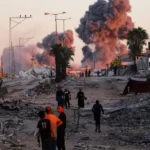
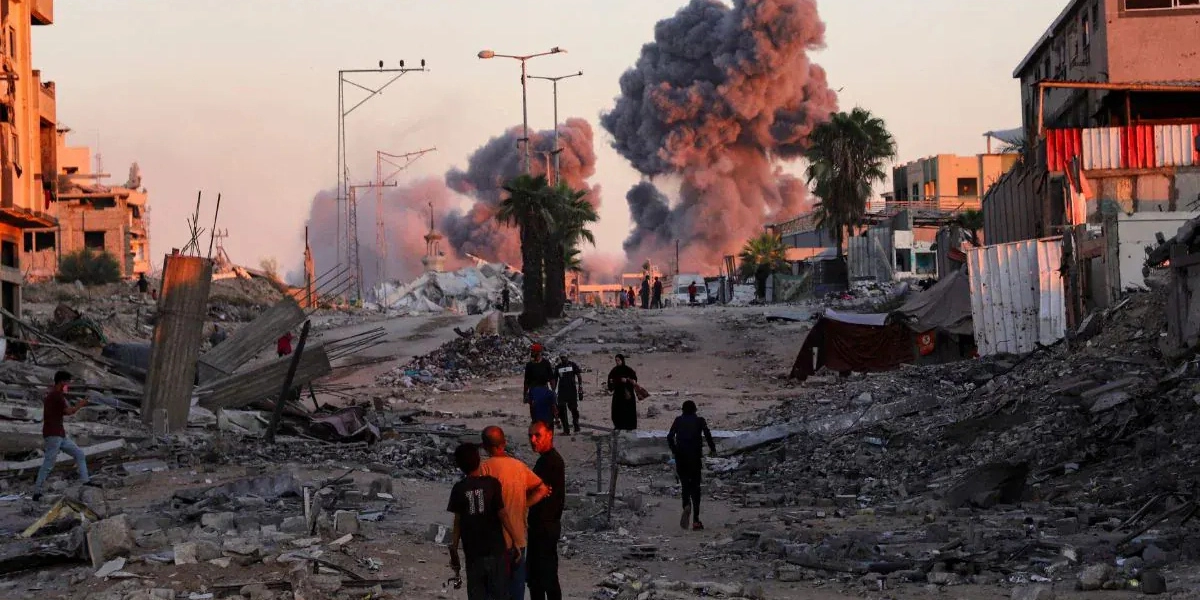
Informed sources revealed an ongoing process to form a security force with a specialised civilian cover that includes about three thousand Palestinians from the people of the Gaza Strip residing in Jordan, within the framework of the arrangements of what is known as the “day after” of the ongoing Israeli war of genocide on the Strip.
The sources stated that this step comes within an international political and security path that is being prepared away from any Palestinian national consensus, and under the direct supervision of regional and international parties, especially the Arab normalisation countries.
According to the sources, the members of the proposed force are Jordanian temporary passport holders residing in Jordan, and will undergo special rehabilitation and training programs, in preparation for their deployment in the Gaza Strip to carry out specific civilian-security tasks.
She explained that this force is not classified as a conventional military force, but will perform functions related to security control and managing daily affairs, according to strict arrangements that follow the so-called “Executive Council for Peace in the Gaza Strip” to be announced by the US administration.
The sources confirmed that the force will be subject to a centralised security department involving the Jordanian, American and Israeli intelligence services, under the direct supervision of the Executive Council, and in coordination with regional parties described as “concerned with stability”.
This arrangement reflects, according to observers, a clear trend to remove the security file in Gaza from the Palestinian framework and place it under multilateral international trusteeship, in which Israeli security considerations advance.
In a related context, the sources revealed a escalating European anger over the marginalisation of the European Union and its effective exclusion from the stages of preparing the ongoing arrangements on the Gaza Strip, despite being one of the largest potential financiers of the reconstruction process.
European circles considered that what is happening is a “closed US-Israeli administration” for the future of Gaza, without real partnership with the Europeans.
This comes at a time when the American website “Axius” quoted officials in the US administration that US President Donald Trump expects to announce next week the formation of the “Gaza Peace Council”, as part of the second phase of the ceasefire agreement.
According to the site, the council will be headed by Trump in person, and includes about 15 leaders of the world, and will oversee the formation of a Palestinian technocrat government that has not yet been announced, in addition to managing the reconstruction of the Strip.
U.S. officials said that a number of key countries are currently invited to join the Council, including the United Kingdom, Germany, France and Italy, as well as Saudi Arabia, Qatar, Egypt and Turkey. This configuration reflects an attempt to broadly internationalise the council, with Washington retaining the role of effective leadership.
Officials noted that the plan is still customisable, following developments in other files on Trump’s foreign policy agenda, including the crisis in Venezuela, and the course of peace talks between Ukraine and Russia. This raises questions about the stability of these arrangements, and the possibility of linking the fate of Gaza to international political bargaining that has nothing to do with the Palestinian issue.
According to the sources, the representative of the Peace Council on the ground will be the former UN envoy to the Middle East, Nikolai Mladenov, who is expected to visit Israel this week, to meet with Prime Minister Benjamin Netanyahu and a number of senior Israeli officials, ahead of Trump’s upcoming official announcement.
The sources said that Netanyahu’s agreement to move to the second phase of the ceasefire agreement, during his meeting with Trump last week, directly contributed to paving the way for the announcement of the council, and linking the security and political track in Gaza to prior US-Israeli understandings.
According to the same data, the first meeting of the Gaza Peace Council is expected to be held on the sidelines of the World Economic Forum in Davos later this month, in a step that carries clear political implications about the nature of the approach to Gaza, as an international administrative-security file, not a national liberation issue.
These developments open the door to a new wave of Palestinian controversy, in the absence of any declared role for Palestinian factions or representative cadres, and growing fears of imposing security and administrative arrangements on the Gaza Strip with the force of the de facto, under the title of “stability” and reconstruction.
