





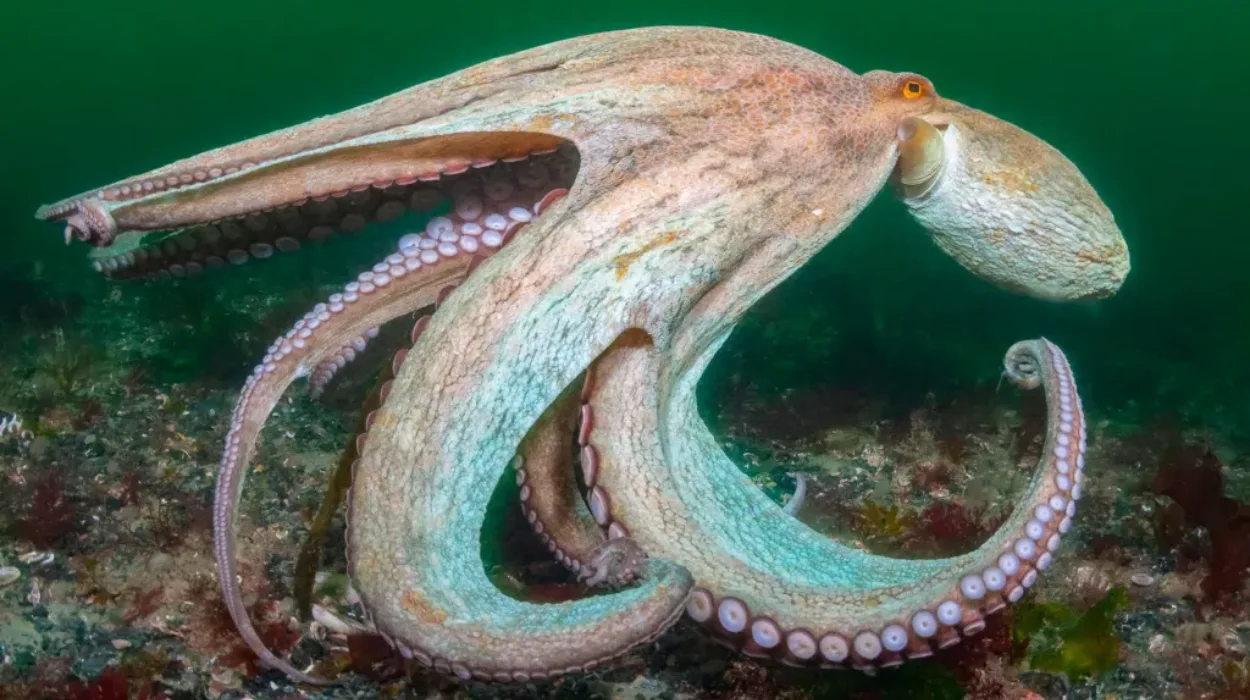
UK Declares 2025 ‘Year of the Octopus’ Amid Record Sightings from Warmer Seas
Conservationists have dubbed 2025 the “Year of the Octopus” after record numbers of the common octopus (Octopus vulgaris) appeared in UK waters, driven by warmer seas and mild winters enhancing larval survival. Sightings surged over 1,500% in Cornwall and Devon compared to 2023, with fishermen catching around 233,000 octopuses 13 times the usual amount and over 1,200 tonnes harvested in summer alone. The Wildlife Trusts called the boom “incredible” and “flabbergasted,” forecasting even higher numbers in 2026 amid rising global temperatures.
Surge in Sightings and Species Details
The explosion primarily affected south-west England, particularly Cornwall and Devon, where Octopus vulgaris—native but rarely abundant in UK waters—thrived due to a “warm breeding season.” Volunteers documented behaviors like walking, mating, self-cleaning, and grabbing underwater cameras, with divers reporting multiples per site.
Key figures highlight the scale:
- Catch volumes: 233,000 individuals in Cornwall (13x normal); summer total exceeded 1,200 tonnes UK-wide, topping 200 tonnes only once since 2021.
- Sightings increase: Over 1,500% along southern coasts vs. 2023; first half of 2025 saw “population explosion” off Devon shores, from single to five+ per dive.
- Historical peak: Highest since 1950s/75 years, last comparable bloom in 1950.
This Mediterranean species reached its northerly limit in the English Channel, boosted by marine heatwaves. BSAC divers noted octopuses even midships on wrecks like the Scylla, unusual habitats.
Climate Change Link and Future Projections
Milder winters, tied to climate change, triggered the “bloom” by improving egg and larvae survival rates. The Wildlife Trusts warned: “Octopus eggs are surviving our warming winters so we are likely to see a regular occurrence of octopus blooms in future years.” World Meteorological Organisation predictions of rising temperatures over five years support expectations of 2026 highs.
While positive for sightings, impacts vary. Fishermen faced disruptions as octopuses preyed on lobster, crab, and scallop pots, but developed global markets from Cornish ports. No ecological collapse noted, unlike year-bookending disasters: North Sea tanker spill (March) and Sussex bio-beads release (November).
Expert Statements from Conservationists
Wildlife Trusts leaders expressed awe and caution:
- Ruth Williams (Head of Marine): “The year had been ‘bookended’ by environmental disasters… Despite the year’s challenges, we’ve had moments of joy and wonder… flabbergasted by the incredible numbers of octopuses.”
- Matt Slater (Cornwall Wildlife Trust): “Exceptional octopus population explosion, the like of which hasn’t been seen… for 75 years.” Noted fisher concerns but market adaptations.
The charity’s annual report branded it the “Year of the Blooming Octopus,” celebrating alongside puffin breeding signs on Isle of Muck and Essex seagrass success. An angelshark sighting in Cardigan Bay added to marine highlights.
Reactions from Divers, Fishers, and Media
Divers and snorkelers hailed the “alien” spectacles, with social media buzzing: Instagram posts called it a “strong climate change indicator” with 1,500% volunteer rises. BSAC’s Kirsty Andrews described escalating shore dives: “From one to five separate individuals just off shore.”
Fishers adapted pragmatically, turning nuisance into export revenue despite pot raids. Media coverage spanned BBC, Independent, ITV, and Telegraph, emphasizing “record” and “exceptional high” amid heatwave links. Facebook and Instagram amplified: “2025 is the ‘Year of the Octopus’ with record numbers seen off England’s south coast.”
No negative backlash emerged; reactions blended wonder (“flabbergasted,” “incredible”) with climate concern. Conservationists urged monitoring blooms as warming indicators, balancing joy with long-term vigilance.
Broader Marine Context in 2025
Amid octopus highs, UK seas saw mixed fortunes: critically endangered angelshark filmed in Wales after four years, puffins breeding on Antrim’s Isle of Muck, and healthy transplanted seagrass off Essex. These offset pollution woes, positioning the bloom as a surprising climate signal.
Experts view regular future blooms as inevitable, prompting calls for adaptive fisheries and research. The surge transforms south coasts, from dive hotspots to commercial shifts, underscoring marine life’s responsiveness to environmental change.
As 2025 closes, the octopus phenomenon captivates, blending natural spectacle with urgent climate messaging for policymakers and public alike.
